


Bunions are a foot deformity that is very uncomfortable. My friend talked about the problem for a long time and often complained that this health problem bothered him during trips, for example. It was only recently, when he stayed overnight at my place and I saw his bare feet for the first time, that I realised that it must really be a problem. I regretted all the stupid comments my friends and I had ever made when he couldn’t keep up on our outings. And unfortunately, it’s not just him. Statistics show that it’s a fairly common complication. Some estimates put it as high as 25-35% of the population.
Bunions are technically called hallux valgus. Sometimes the complication appears on one foot, but very often it happens that a person has bunions on both feet. And then he suffers. And from what my friend tells me, it really is hell. The big toe starts to deviate towards the other toes and a painful bone lump forms on the inside of the foot at the big toe joint. This also makes it hard to fit into shoes, so it really hurts to walk.
How do problems arise?
“Walk upright. Walk straight!” If you heard these commands from your parents when you were little, it’s quite possible that you will have complications with bunions. In fact, studies show that walking upright may be one of the reasons why problems arise. Timothy Miller, an American podiatrist, points out that the modern way of moving and the environment significantly changes the load on the foot. “We really were made to walk on grass and soft surfaces. Today we walk on hard floors and concrete,” he says.
Other factors that influence bunions are:
- Narrow or high shoes (especially wearing heels for long periods of time)
- Heredity – sometimes the tendency to this deformity is inherited
- poor foot structure or flat feet
- overuse of the feet at work or in sport
If the first symptoms appear, (pain when walking, blisters or corns, rubbing of the big toe against the second toe), it is necessary to start solving the problems. The longer you leave complications unaddressed, the less chance you have of doing something about them later.
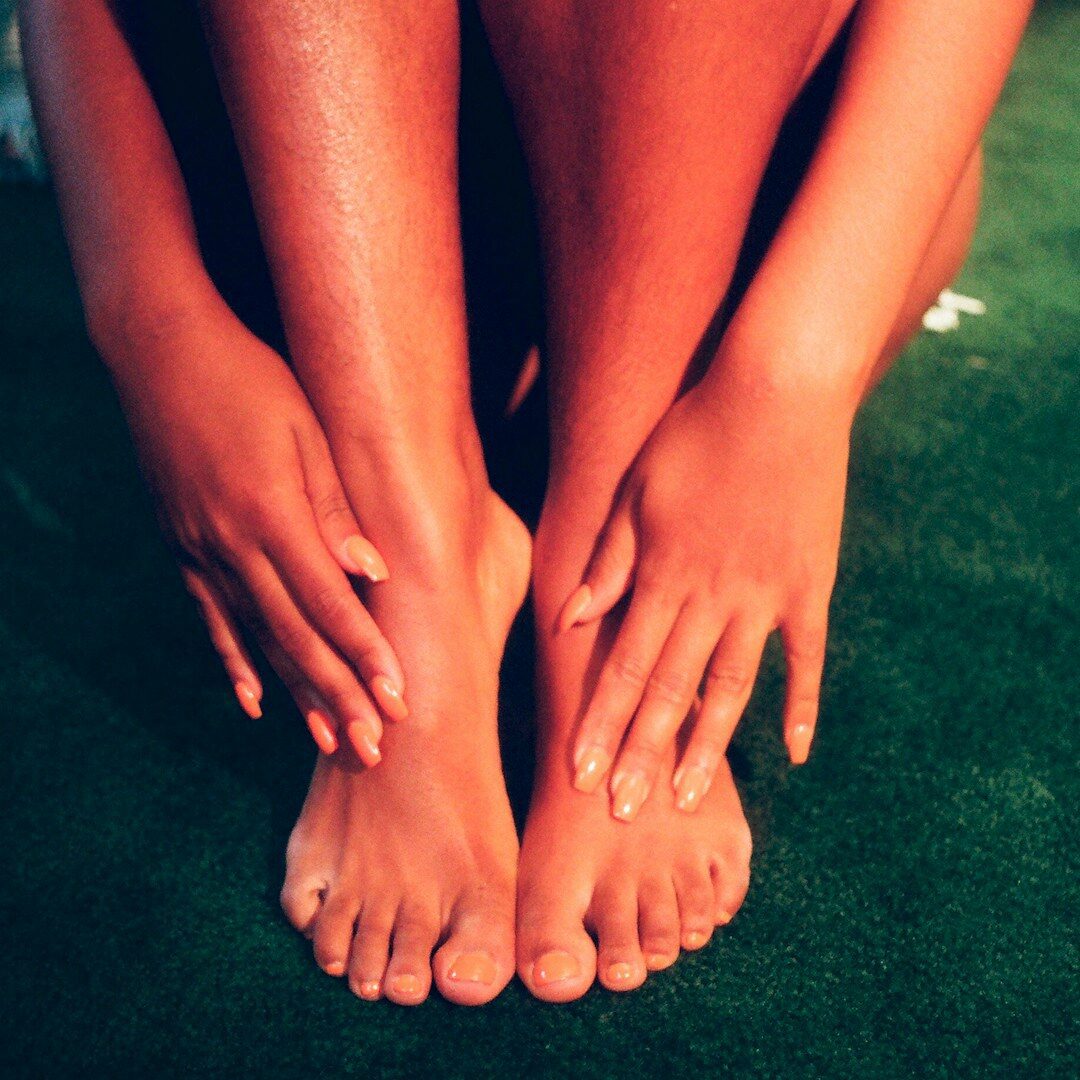 ━━ Do you want to have beautiful feet and not have to deal with bunions? Maybe your upright gait is to blame.
( Source: Billie / Unsplash+ )
How to solve the problems?
Depending on how serious the problem is, it can be solved in several ways. These include:
- wider and comfortable shoes
- orthotic insoles
- special correctors or toe splints
- foot rehabilitation exercises
- for severe cases of surgery
Unfortunately, my friend’s problem is quite serious. He has tried several types of rehab, but they have not helped. There are other rehab options, but those are already private and thus obviously covered. So he is addressing the complications with comfortable shoes, insoles, and is even considering surgery. This is often covered by insurance in severe cases, but whether this will be the case in his case is not certain, it depends on what the doctor says.
In any case, the longer a person ignores the problem, the worse it gets. Even he realizes that if he had started rehab early, it might have worked. But he ignored the symptoms for a long time, then took them lightly and didn’t go for regular check-ups because he thought it was nothing. Now he regrets it. But at least he has convinced me and my friends that prevention is very important in health and that one should not underestimate even minor complications. They can develop into much bigger ones.


 A. Urban

 L. Novak

 O. Müller

