

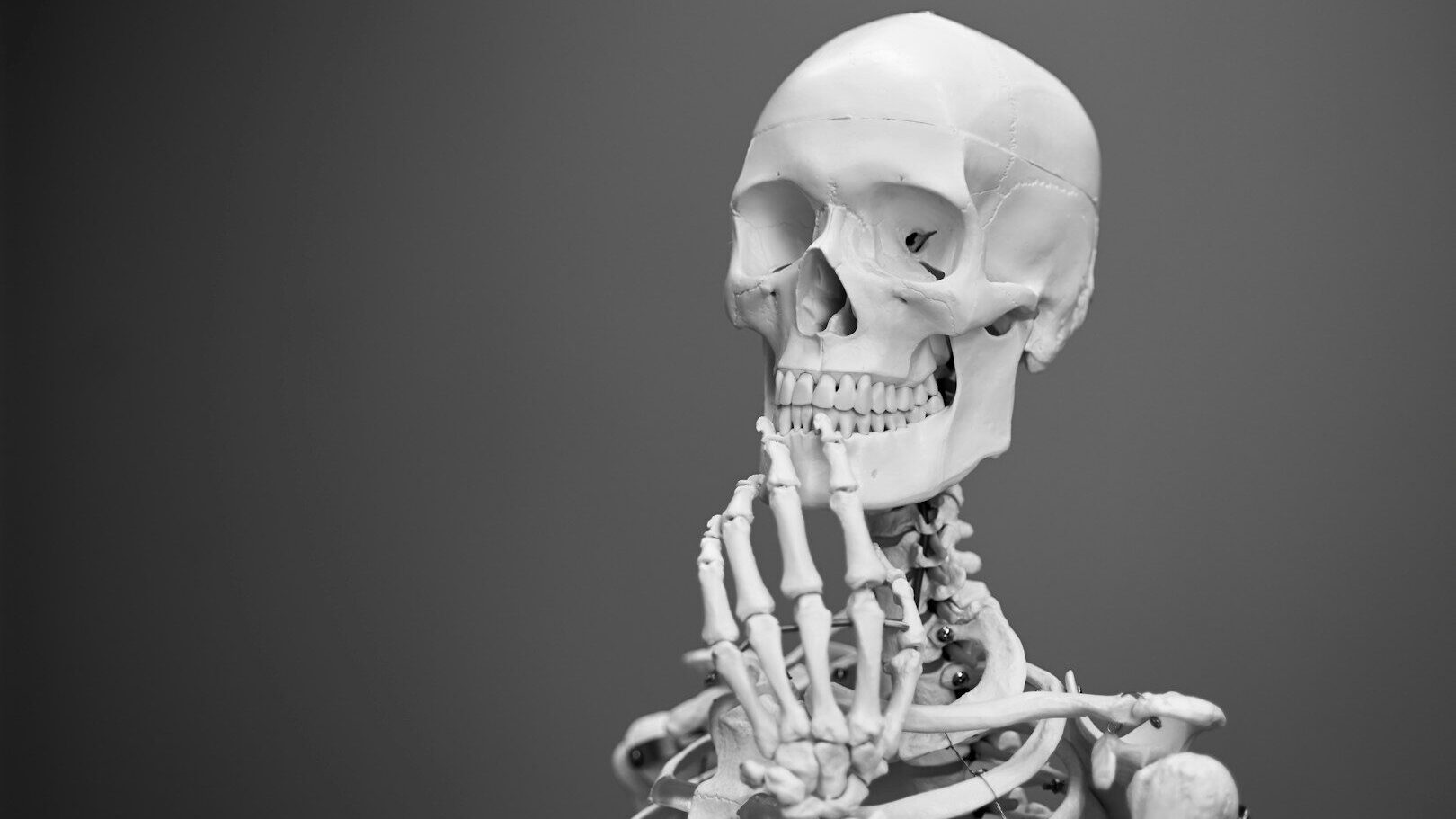
A friend of mine recently had a son. Looking at his little body, I wouldn’t have thought he had 215 bones in his body. We were taught that number in elementary school, with the understanding that it applies to a healthy adult. It’s just not the same for kids. When I was raising a roughly four-pound baby, I got to thinking about where exactly that extra 100 bones were hiding in such a tiny human. Yes, babies do have over 300 bones after birth, but few people know that. Although my friend was surprised that this was the information I gave her after burying her son for the first time, she will never forget it for the rest of her life.
Young children are defenseless creatures who must be handled with great care. Their bones are fragile, even a minor wound that an adult would not even notice can have fatal consequences. The fact that their bones are weak doesn’t change the fact that they have far more than we do. How and when do they start to disappear? And at what age does the number plateau at 215?
It’s important to understand the composition and function of bones
I remember that I have 215 bones not only because of school, but also because I used to be very active and often broke something. My parents used to laugh at me that I would break every bone in my body one day and often repeated the number as a joke. To understand why children have a different number of bones than we do, we need to know what their structure and function is.
“Bones are often thought of as static structures that only provide structural support. However, they actually have many functions, just like other organ systems. In addition to serving as a frame for soft tissue, bones allow movement, protect vital organs, facilitate respiration, play a role in electrolyte homeostasis, and contain hematopoietic sites,” explains Paul T. Cowan.
Moreover, not all bones are strong and hard. It is the connection between living tissues and calcium, continually strengthening them. If we don’t give them enough nutrients, they will weaken and soften. Inside the bones is the spongy tissue that makes up the bone’s interior, and then the bone marrow.
 ━━ Did they teach you in school how many bones the human body has? And did they tell you that you had more than that as a child?
( Source: Ashley Levinson / Unsplash+ )
━━ Did they teach you in school how many bones the human body has? And did they tell you that you had more than that as a child?
( Source: Ashley Levinson / Unsplash+ )During life they grow
When babies are born, they have more than 300 tiny bones in their bodies. Many of these are made up of cartilage, so they are very durable and flexible. This is important because otherwise the baby would not be able to grow quickly and healthily. The moment a baby starts to develop, the cartilaginous tissues slowly but surely start to change into actual bones. Many of them will shrink and their total number will decrease very radically. Eventually, it settles down to 215.
This does not mean, however, that the bones do not change any further in adulthood. By the way we eat and the lifestyle we live, we provide nutrition to the bones and strengthen or weaken them. For example, I personally know that I should consume more calcium and vitamin D because I was recently informed by my dentist that my jawbone is not quite the strongest. So, although the number of my bones will remain the same, I have to think about their health all the time.


 A. Urban
 L. Novak
 O. Müller
