

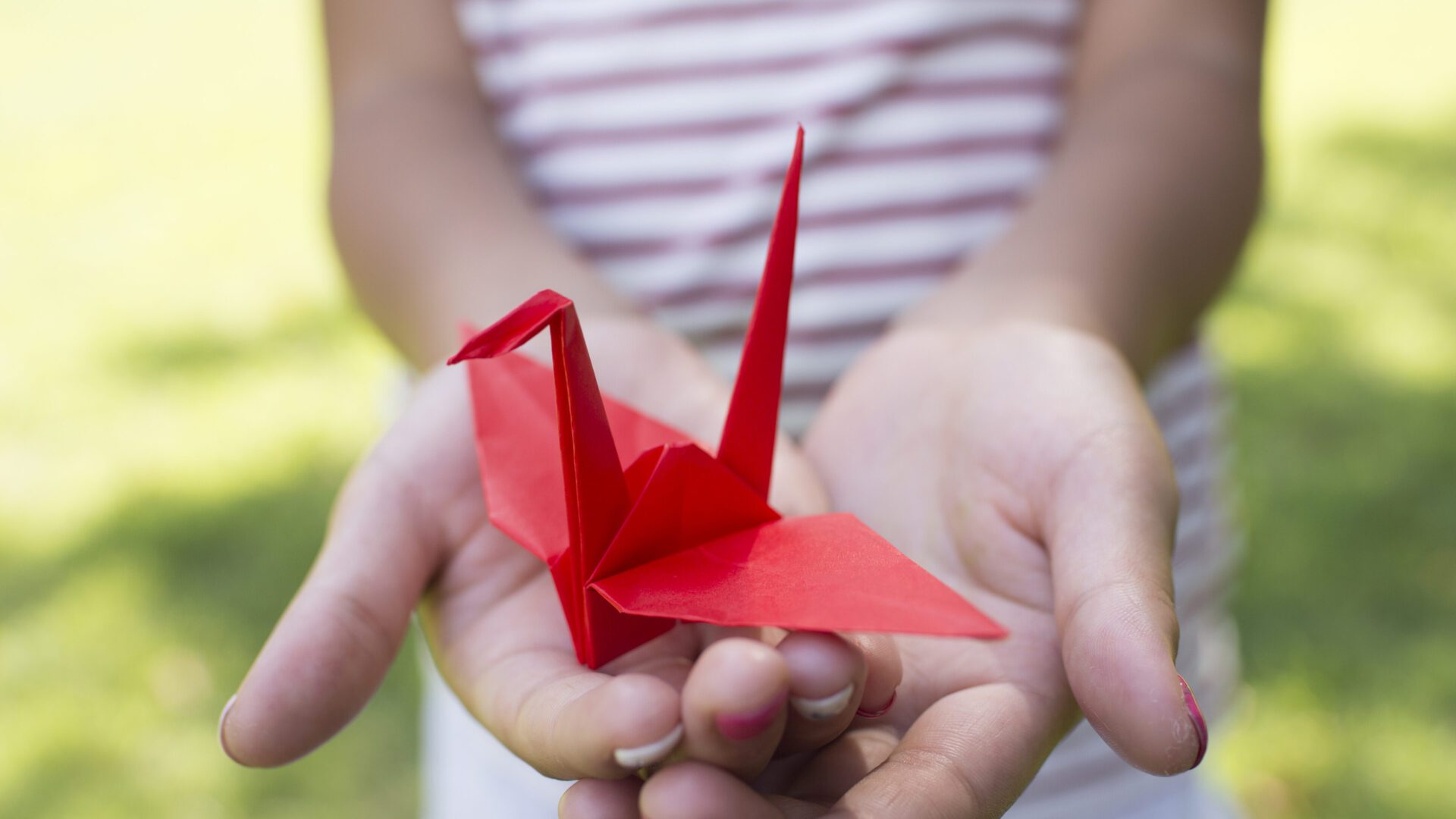
Origami is a Japanese art that is considered a unique technique. From a simple activity that was meant to induce tranquility and bring pleasure, it has become a serious field. In honour and commemoration of this, World Origami Day was created and is held annually on 11 November.
What is origami?
The art of origami originally originated in ancient Japan. It is a complex technique of folding paper into a variety of interesting shapes that has permeated a number of disciplines such as geometry, mathematics and technology. Over the centuries, origami has changed, and so has its meaning and use. Origami is proof that a simple activity such as folding paper has grown into a globally renowned activity. It is not just a leisure activity, but a tradition and a discipline that is practised by experts.
History of World Origami Day
The idea of celebrating the art of origami first emerged in the 20th century. It was inspired by Japanese and American organisations whose aim was to bring the principles of origami to the rest of the world. In Japan, the Japan Origami Association worked to preserve the traditional technique while encouraging the development of creativity in people. This organisation subsequently declared 11 November 1980 as Origami Day, Origami no Hi.
The date chosen had important symbolism. The combination of the numbers 11/11 represents the four parallel lines that indicate the lines of the folded paper. The second reason for the choice was the birth of Akira Yoshizawa, who transformed the modern perception of origami. However, the day was seen more as a local celebration before it began to spread to the world.
 ━━ Origami is popular all over the world.
( Source: Pressmaster / iStockphoto )
━━ Origami is popular all over the world.
( Source: Pressmaster / iStockphoto )Extending to the world
In America, OrigamiUSA was founded in 1980 to spread origami in the Western world. The technique quickly gained popularity here. In 2005, it was proposed to set an official World Origami Day on 24 October. The date was chosen as a tribute to Lillian Oppenheimer, who was one of the most prominent disseminators of the art in the USA.
However, Makoto Yamaguchi, founder of the Origami House Gallery in Japan, drew attention to the already existing Origami no Hi. International collaboration ensued , leading to the creation of World Origami Days, held annually from October 24 to November 11. Today, World Origami Day is officially celebrated on 11 November, which completes a 19-day period starting in October.
A symbolic link to peace
The most famous symbol and shape of origami is the crane, which symbolizes peace, happiness, longevity and hope. Its significance is deepened by the story of Sadako Sasaki, a girl who survived the bombing of Hiroshima. After the attack, however, she suffered the effects of radiation, which caused her to develop leukaemia. Believing that she would recover, she began to fold paper cranes. She hoped that if she folded 1,000 pieces, she would not succumb to the disease. Although she did not reach her goal, the power of her story endured. To this day, paper cranes are still folded as a symbol of healing and hope.


 Šárka Cvrkalová

 L. Novak
 O. Müller
