

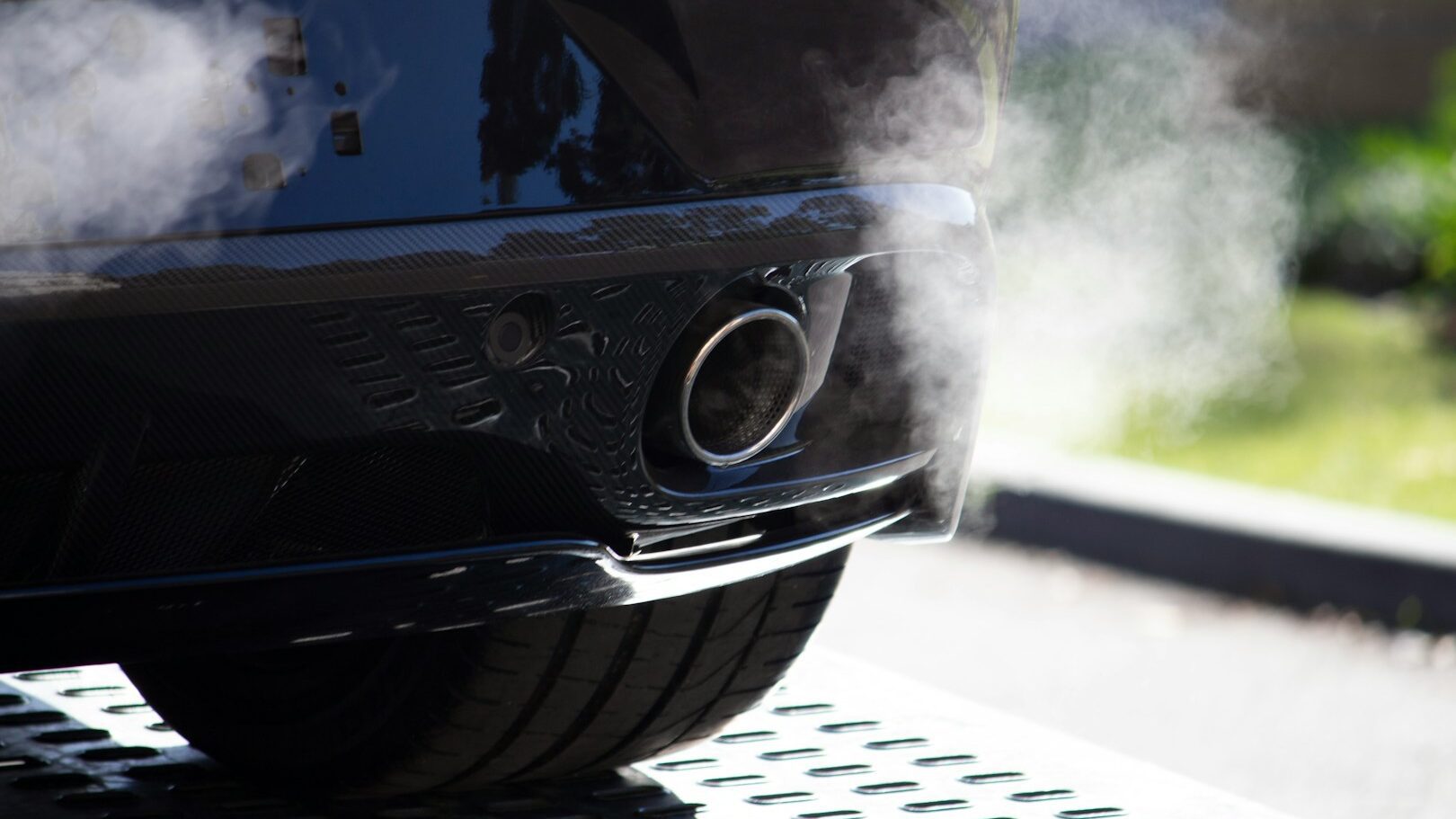
When we were kids and my parents were driving around in the car, my sister and I would always talk about when someone’s tailpipe was smoking. So drivers who tended to show off at traffic lights and leave the intersection in style are no longer my heroes today. Childhood naivety has left me and some awareness of how exhaust destroys the air has come. Beyond that, though, I also know that in some cases the colour of the smoke can reveal a lot about the car’s malfunction.
Normally, exhaust fumes should be virtually colorless. That doesn’t mean that they don’t harm the air, but you can get practically nowadays without a car, and you can at least be sure that your car is not in danger of any serious breakdown. But if the smoke turns white, black or even blue, it usually indicates trouble.
White exhaust fumes
If there’s a noticeably thick white smoke coming out of your car’s exhaust, it’s usually due to water getting into it. There are several reasons why this happens. And while it could be something harmless, personally, I’d rather get out right away and check for the more dangerous possibilities.
- Condensation: if it’s cold and damp outside, water simply gets into the exhaust after it leaves the car. While this vapor is not a cause for concern, since there are other issues that create a similar effect, it’s not a bad idea to check the situation.
- Cylinder head gasket: If the cylinder head gasket is damaged, coolant is getting into places where it can do damage. It evaporates in the combustion chambers and produces white smoke. This problem should definitely be addressed by a specialist as soon as possible.
- Fuel problems: white smoke can also occur when fuel residue gets into the fuel. But what is certain is that you should definitely not travel anywhere in such a car.
 ━━ Significant smoke from a car's exhaust doesn't bode well. Besides ruining the air, in some cases it can also indicate a serious car malfunction.
( Source: Ed Parker / Unsplash+ )
━━ Significant smoke from a car's exhaust doesn't bode well. Besides ruining the air, in some cases it can also indicate a serious car malfunction.
( Source: Ed Parker / Unsplash+ )Black exhaust fumes
Unlike white exhaust fumes, black exhaust frightens people almost immediately. At least it did for me. And I doubt anyone who gets that kind of smoke from a car would voluntarily stay in the car. The engine is either getting too much fuel or not enough air. So it can’t burn all the fuel and pushes the excess out.
The problem arises quite simply: fuel and air enter the engine together. But if the ratio is wrong, it can damage several key parts of the car. So it starts with black smoke, but it can also end with a burning car. Getting out and getting help is really the way to go in this case.
Blue exhaust fumes
The blue smoke coming out of your car’s exhaust may or may not be harmless. I personally do not find this information reassuring and would certainly not risk a journey in such a car.
- Too much oil: If your car has had an oil change recently, it could simply have too much oil added. In this case, you need to wait for the problem to sort itself out.
- Leaky oil circuit: If this complication occurs, oil can enter the combustion chamber along with the fuel. This can be caused by faulty cylinder head gaskets, worn piston rings or damaged valve seals. It simply means a service visit is required.
- Broken turbocharger: This part of the car increases the air supply to the engine. If the turbocharger breaks, oil gets into the intake manifold and this causes the exhaust to turn blue.
While not in all cases is colored smoke a problem that needs to be addressed with a technician, at a minimum getting out of the car and making sure everything is okay is always in order in my opinion. Certainty is certainty, and you certainly don’t want to deal with serious problems just because you underestimated their fairly clear signs.


 A. Urban
 L. Novak
 O. Müller
