

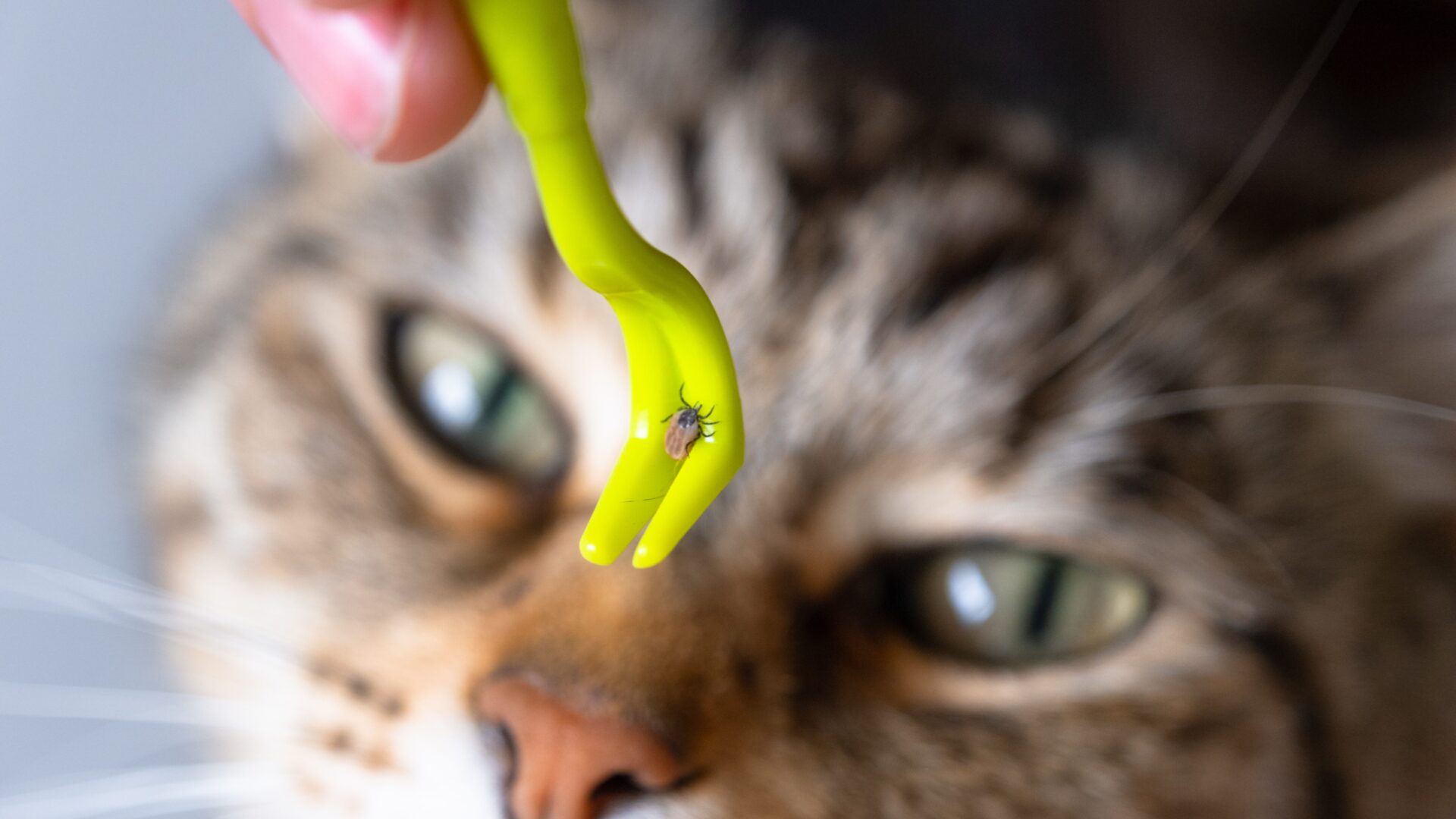
Caring for pets is not just about feeding, cuddling and exercising them regularly. Just like with humans, preventive health is important. Of course, this includes prevention against external risks such as parasites.
Application of antiparasitics
It is important to apply special anti-parasite products early. It takes time for them to take effect. It is not advisable to delay the application, otherwise you will put the animal at risk of infection. Despite the application, it is advisable to check your animals daily. And of course also avoid contact with parasites if possible.
Despite great advances in treatment , these infections remain a major threat. Of course, parasites also affect the well-being of pets and, due to their often zoonotic nature, they also pose a threat to humans.
Our dog wears a parasite collar around his neck and lives mainly in the garden where the grass is often cut. If we go for a walk where there is a greater risk of parasites, I always take the time to check the dog when we get home. I have had to take out ticks several times. And the warm days are practically just coming.
Two types of parasites
Parasites are divided into two basic groups – endoparasites and ectoparasites. Endoparasites live inside the body, for example in the intestines or blood, while ectoparasites, such as ticks or fleas, infest the surface of the body. Regular deworming is recommended 2-4 times a year for endoparasites and more often for puppies and kittens. For ectoparasites, year-round protection is advisable, as ticks also appear outside the main season due to milder winters.
Diseases are not uncommon
Skin diseases caused by ectoparasites are not uncommon, especially in large animals. The most common parasitic dermatoses are scabies, pediculosis, habronemiasis and onchocerciasis. In small animals, parasitic dermatoses are relatively common and may be caused by a direct effect of the parasite itself or the parasite may act as an intermediate host or vector of a bacterial or rickettsial disease.
 ━━
( Source: Maricar Viray / Unsplash+ )
━━
( Source: Maricar Viray / Unsplash+ )How to choose the right antiparasitic
There are many preparations against parasites. When choosing, it is always important to take into account the size and, above all, the weight of the animal. In addition, the possible sensitivity to chemicals and the parasites against which you want to protect them. It should be borne in mind that applying the product only once will not be enough. Most antiparasitics must be administered repeatedly.
Collars, spot-ons, tablets or injections are available. The choice should be based primarily on the animal’s lifestyle. For heavily coated dog breeds, you may choose a product applied to the skin. If the animals like to bathe, keep this in mind and choose a product where staying in water will not reduce the effect.
In addition to antiparasitics, it is also advisable to give vitamins to the animals. Brewer’s yeast is great, as it contains vitamin B and beta-glucans. They are ideal for kick-starting immunity after the winter.


 Šárka Cvrkalová
 A. Urban

 O. Müller
