


I have many friends who call themselves coffee lovers, but in reality their favourite drink is latte. I don’t blame them, I too prefer a sweet drink where coffee is kept to a minimum and milk to a maximum. But I honestly admit that knowing the quality of coffee beans would be a superhuman task for me. And I have a feeling that even some experts would have a problem with it. Lately, so-called fake coffee has been appearing on the market more and more often and one should be very careful about what one actually drinks.
The main reason for counterfeiting coffee beans is, of course, money. But how can someone actually produce fake coffee? It’s easy. Fraudsters use ordinary pulses instead of quality beans. The problem was discussed prominently earlier this year when Vietnamese police uncovered a number of counterfeiters. But fake soya coffee is still a problem today, even in Central European countries. This is mainly due to the growing popularity of internet purchases.
Indistinguishable from the original
I wouldn’t know a fake coffee from a good one at first sight. I have the impression that even my friends and self-proclaimed coffee bean experts would have a problem. It is often difficult to detect the reality even for those who have been in the business for many years. “Coffee has been the target of adulteration for centuries. And detection methods must constantly evolve due to the increasing complexity of fraud,” explain the authors of the 2021 study.
Detecting soy coffee is very complicated for several reasons:
- roasting changes the soybeans and the coffee chemically
- similar brown pigments are produced
- the differences in taste and smell often fry after grinding and roasting
Complex chemical methods are used to find the differences. So first the suspicion that the coffee is fake must arise, then action is taken. Fraudsters usually have time to react and escape punishment.
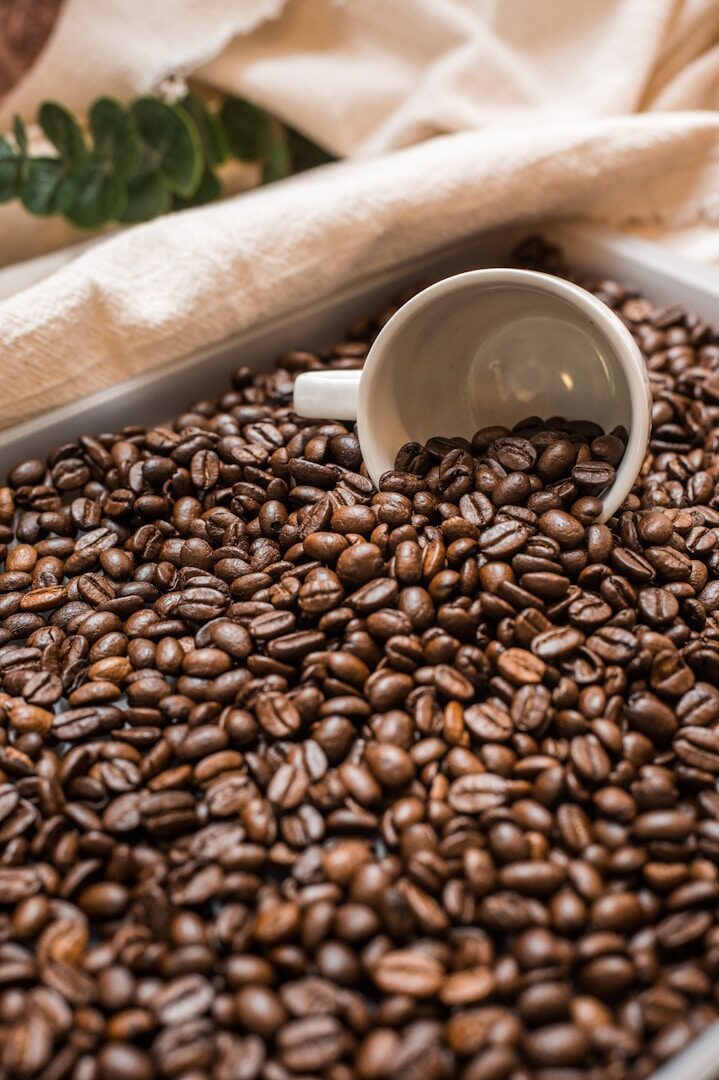 ━━ Especially when buying coffee on the internet, one should be careful not to get burned.
( Source: pariwat pannium / Unsplash+ )
━━ Especially when buying coffee on the internet, one should be careful not to get burned.
( Source: pariwat pannium / Unsplash+ )Beware of internet scams
The internet is a magical place that can make our lives easier, but it can also make them more complicated. Young people are aware of this. But as the granddaughter of two proud 70-year-old smartphone owners, I know that for the older generation, the risks are non-existent. They see something that is absurdly convenient, yet they fall for it. I’ve saved my grandma and grandpa from scammers countless times.
My grandfather in particular is a lover of good coffee. Fortunately, he has stuck to a few brands for years that are more expensive but proven. And he would never buy them from shady stores. Interestingly, he is quite careful in this regard, whereas he would order a mobile phone for a ridiculous amount without any problem. However, I know that many pensioners are in a similar position and don’t care that much about the quality of their coffee. Then it is very easy to get fooled.
If you buy beans on the internet, be careful. Coffee from unverified shops can cost you not only too much money unnecessarily, but also your health. Usually, the scammers use soybeans that are safe for health, but in general, unverified origin of raw materials means health risks.


 A. Urban
 L. Novak
 O. Müller
