

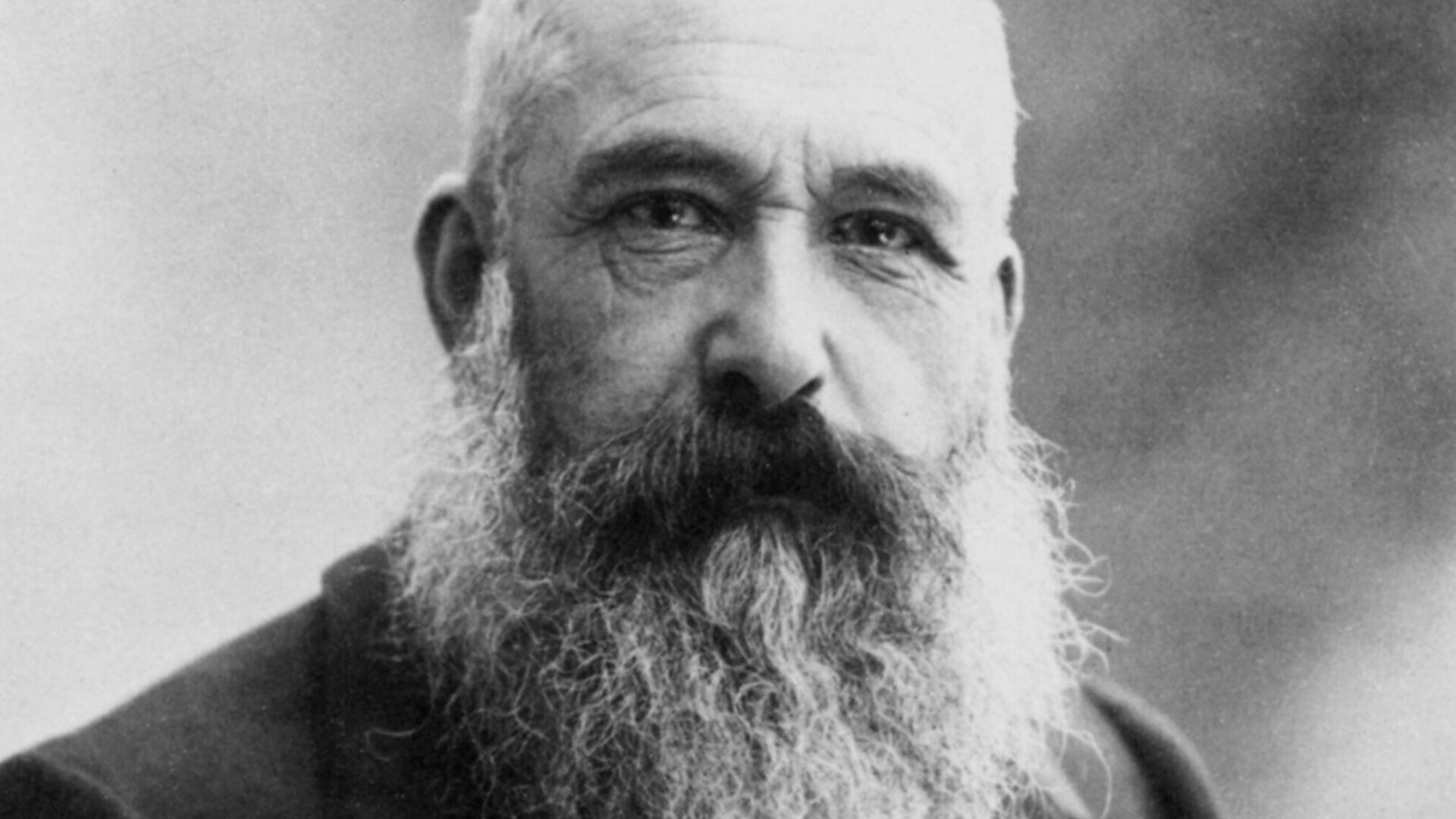
The famous French painter Claude Monet made a significant impact on the world of art, giving rise to a new artistic movement called Impressionism. He was able to capture the colours and lights of nature on canvas in a unique way. His influence and memory are still remembered on 14 November, the day of his birth. Why was he so important and what approach did he take to painting pictures?
The birth of an artistic legend
Claude Monet was born on 14 November 1840 in Paris. When he was five years old, his family moved to Le Havre, a port city in Normandy. He was a very inquisitive boy, but his interest was not in his schoolwork, although he was a good student, but in nature. He developed a love of drawing very early on , and particularly enjoyed sketching people or making caricatures of his teachers. His mother, unlike his father, encouraged him in his artistic direction.
The surrounding nature and the atmosphere of the city were a great inspiration for him: the changing intensity of the light, the unpredictable sea and the changeable weather. When he met local landscape painter Eugene Boudin, he taught him to paint in the open air, en plein air. This was the basis of his work, which inspired the creation of Impressionism.
Paris and the search for a new style
Monet later moved to Paris to study art, but the rigid academic rules did not suit him. It was a crucial period, however, as he became friends with painters Renoir, Sisley, Pissarro and Degas. They shared the same mindset, so they decided to paint in their own freer and more spontaneous way, emphasizing light and color. Together they held their first exhibition in 1874, but it was negatively received by critics. He exhibited his painting Impression, Sunrise, which depicted the harbour at Le Havre in the morning mist. Critics used the title to pejoratively label a group of these artists as “Impressionists”. This paradoxically gave rise to the naming of a new artistic style.
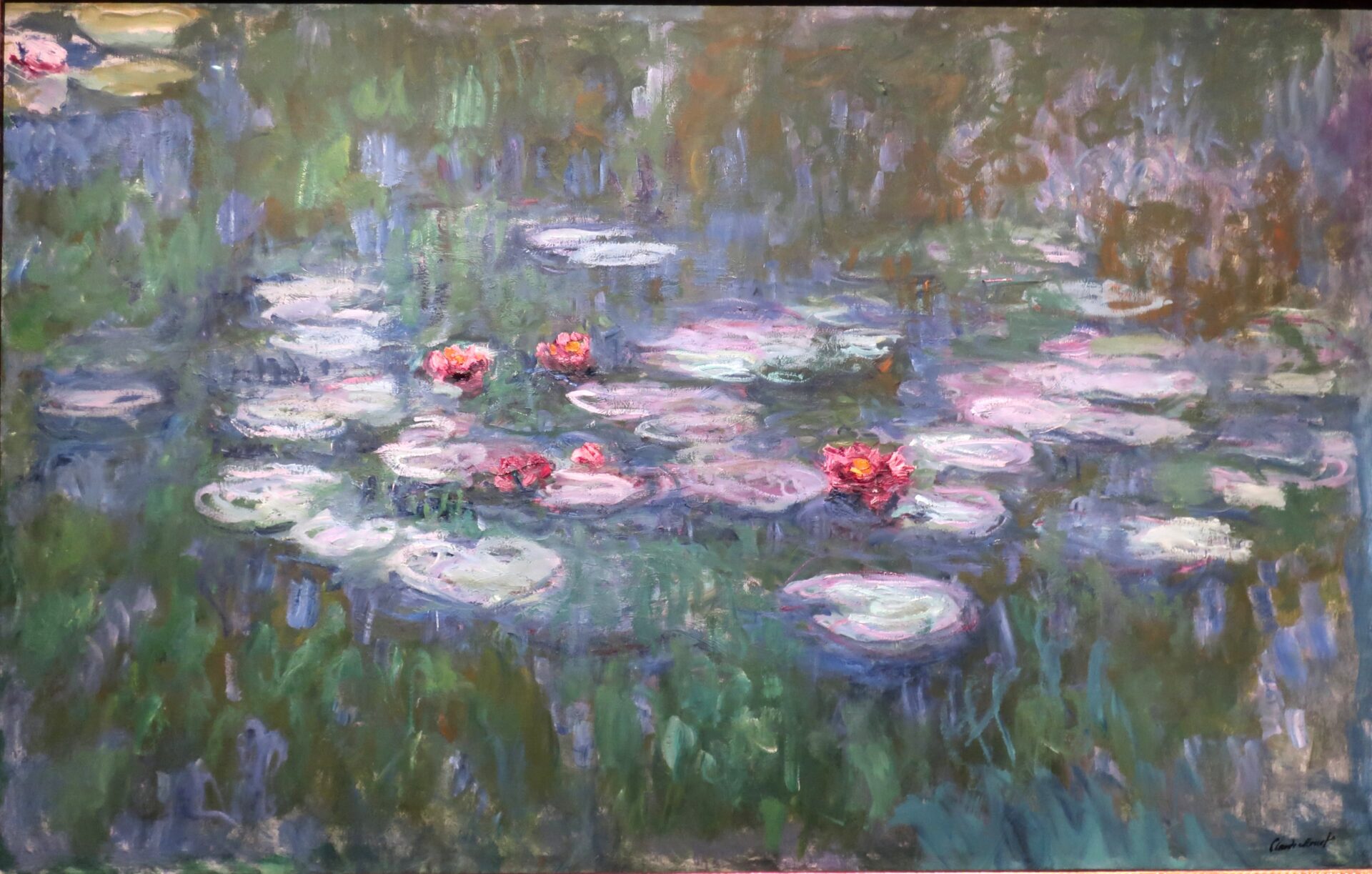 ━━ Claude Monet created a series of paintings which he called Water Lilies.
( Source: Claude Monet / Wikimedia commons )
━━ Claude Monet created a series of paintings which he called Water Lilies.
( Source: Claude Monet / Wikimedia commons )Impressionism: the beauty of the moment
The Impressionists aimed to capture fleeting moments, so Monet devoted himself to painting landscapes, seascapes, gardens, and other scenes depicted in the changing seasons. He was not concerned with detail, but with capturing the colours and light that reflect the natural elements. In doing so, he wanted to bring a kind of harmony and liveliness to the painting, even though his strokes seemed unfinished.
He later moved to the small village of Giverny, near Paris. There he created his own garden, which became his greatest inspiration. It shone with colourful, beautiful flowers, countless trees grew there and a lake with water lilies added to the atmosphere. This created an open-air studio. This is where the inspiration for the famous Water Lilies series of paintings came from. Monet’s obsession with light was evident in all his works. Although each painting captured a different scene, mood and colour, this fascination was always evident.
A celebration of the genius of light
However, old age gradually robbed him of his sight, as he suffered from cataracts. Although he found it difficult to distinguish colours, he continued his passion. He finally died on 5 December 1926 at the age of 86 in his beloved Giverny.
Claude Monet left behind more than just paintings. His birthday on 14 November is commemorated because he brought a new perspective on art, one that was not bound by rules and which he presented despite criticism. Art was thus later seen as free, spontaneous and referring to the joy of life. Monet showed that one could look at the world around them in a unique way.


 Šárka Cvrkalová

 L. Novak
 O. Müller
