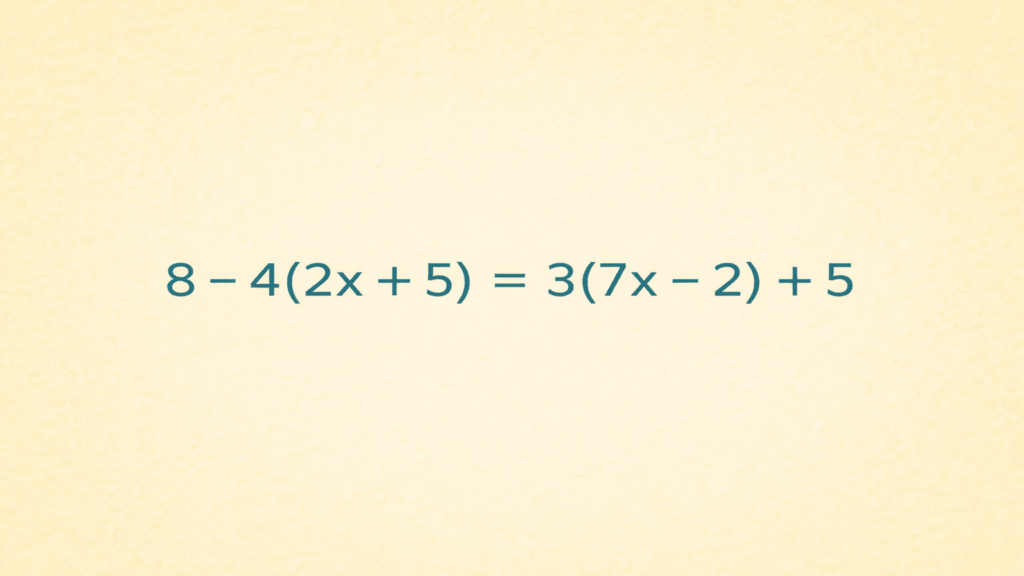
This is not an equation for the impatient. Six terms, two parentheses, and the result hidden at the end of a careful calculation – this is exactly the kind of example that distinguishes those who calculate from those who merely estimate.
Time for a little break from the routine – but one that really gets the brain working. Mathematics has a reputation for being a boring discipline, but in fact it is one of the few ways to force the mind into absolute accuracy. No “approximately”, no “just about”. Either the result fits or it doesn’t. And this uncompromising nature is why, according to cognitive scientists, people who regularly solve equations show a better ability to focus on detail even in situations that have nothing to do with math. In short: training to think accurately carries over into your whole life – and one line of an equation a day is enough.
What’s in store for you today?
In the picture you will find the equation: 6(3x – 2) + 5x – 8 = 7x + 4(x + 3) + 6. Take a pencil and paper and follow the steps.
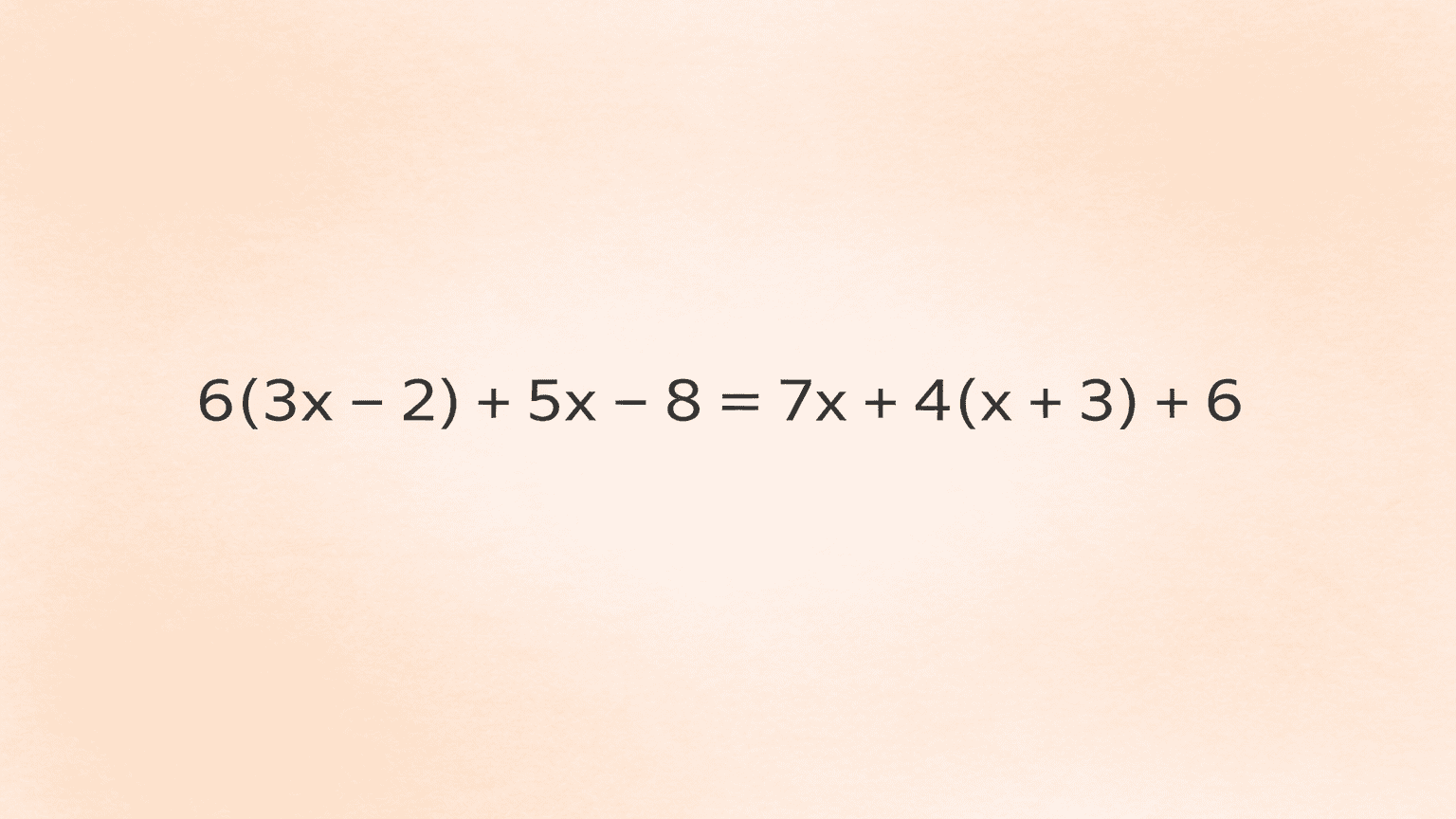 ━━ Calculate the example.
( Source: Shutterstock )
The correct solution
How did you do? Did you get through the whole calculation smoothly or did the number of members catch you by surprise? Let’s take a look together now.
The correct result is x = 19/6.
Expand the parentheses: 18x – 12 + 5x – 8 = 7x + 4x + 12 + 6. Simplify both sides: 23x – 20 = 11x + 18. Convert the variables: 23x – 11x = 18 + 20, so 12x = 38. Result: x = 19/6.
Anyone who made a mistake was most likely making the mistake of combining six terms at once – that’s where a small oversight is easiest to hide.
Share this equation with friends or colleagues and see who doesn’t get discouraged by the number of terms and arrives at the correct result. Regular practice of problems like this has been shown to strengthen concentration, improve working memory and keep analytical thinking sharp, regardless of age.
More equations, puzzles and IQ challenges await you on our website – come find out where your limits are.


 Šárka Cvrkalová

 A. Urban

 L. Novak