

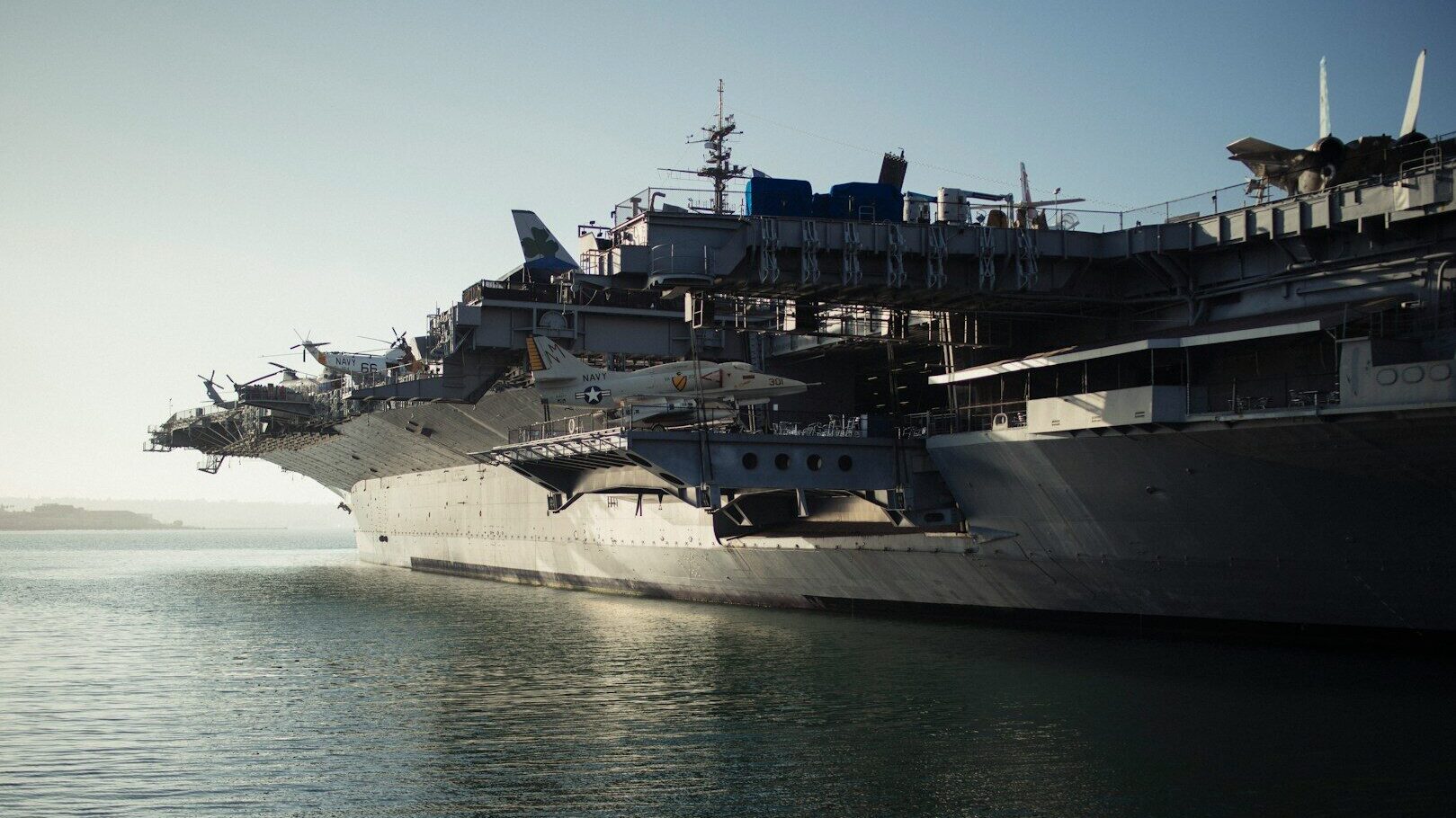
Aircraft carriers are a very essential part of the military forces. They are huge and nowadays, of course, have many modern systems of defence against enemies. But even the strongest adversary has weaknesses. And in this case it is usually submarines, which, although many times smaller, can do great damage and turn the tide of many wars. This was first proven many years ago. And it is fascinating that this balance of power continues today.
In 1981, an $80 million Canadian diesel submarine successfully simulated an attack on the USS Eisenhower, then estimated to be worth $5.5 billion. At the time, this manoeuvre exposed the weaknesses of huge sea bases. I would expect the data to be used to make ships more stable, stronger and submarine-proof today. But logically, technology is moving forward on both counts. Even today, ships are often defenseless against submarines.
Respect for submarines
Aircraft carriers are significant because they provide a mobile air base at sea and allow rapid intervention anywhere in the world. “These major airfields are capable of repositioning up to 500 miles a day without hindrance. This allows the air forces of specific countries to be much closer to where they need to be used,” explains Admiral Lord West of Spithead. Only, of course, the importance of the ships is realised by their enemies, who defend against them mostly with submarines.
NATO exercises more than 40 years ago showed that submarines can be able to approach ships undetected and sink them. At the time, a Canadian Oberon-class diesel submarine simulated an attack on a U.S. ship, a success against the U.S. Navy’s strong defences. To this day, that’s why aircraft carriers still have respect for submarines. The lessons learned then have been used by both sides over the years.
Nowadays, of course, they can be used in many conflicts. They are important for the US, but also for Israel, and they can have a big impact on Iran and other countries. Years ago, it became clear that tactics, exercises and execution techniques are often more important than the number of troops or their strength.
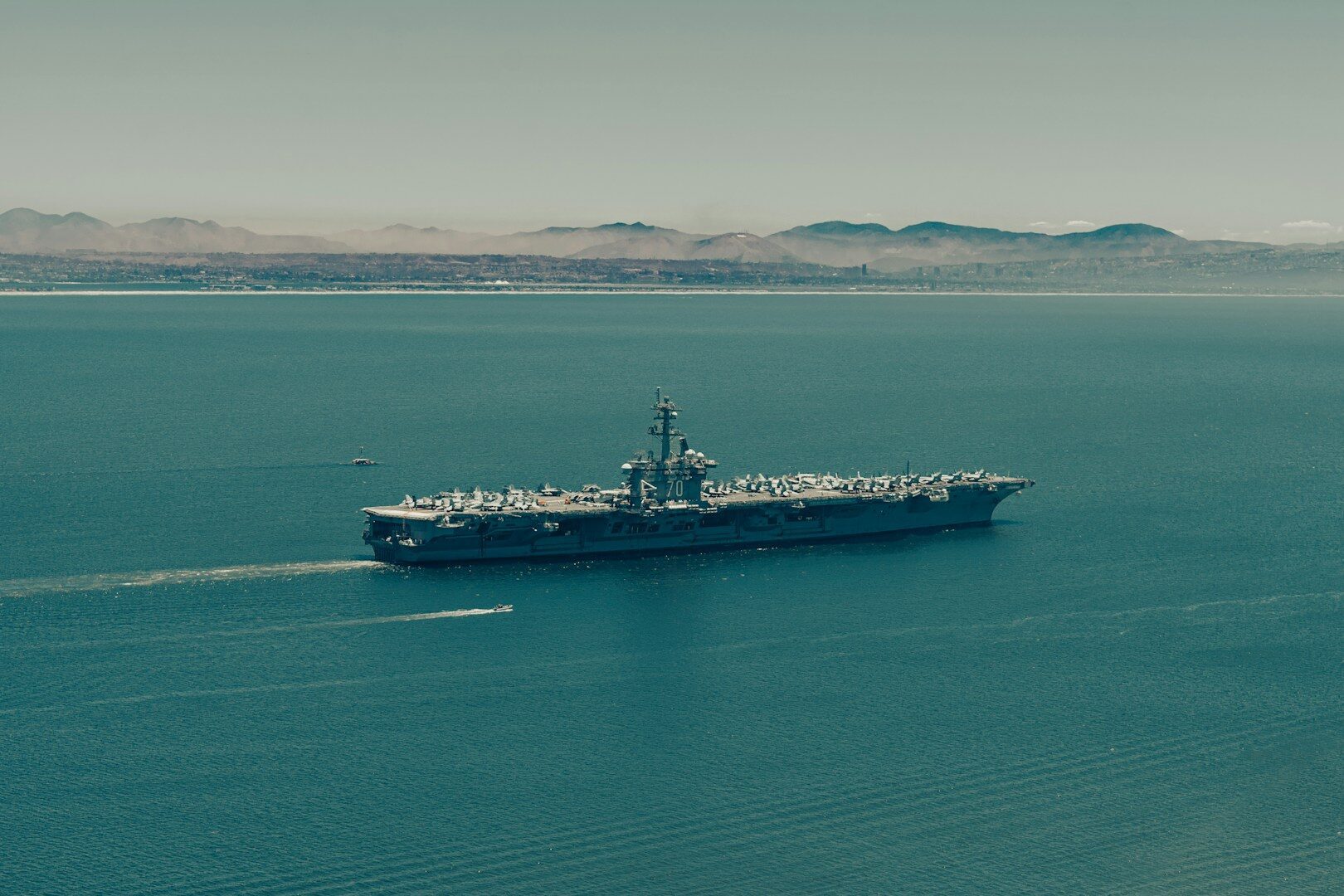 ━━ There have been significant advances in military technology in recent years. But submarines are still a huge challenge for today's aircraft carriers.
( Source: William Rudolph / Unsplash+ )
Expensive and heavy war technology X weaker but smarter enemy
The biggest problem with humanity in general, in my opinion, is that we often tend to underestimate others. This is true in many ways, and it applies to warfare as well. What at first sight appears to be a clearly winnable battle may end up in bitter defeat. It is the small and seemingly inconspicuous submarines with modern technology that prove that expensive and heavy warfare technology can be strategically overcome.
“The strategic assumption of the invulnerability of the aircraft carrier has been shattered many times in the past by the pattern of successful attacks by smaller vessels,” says, for example, Brandon J. Weichert, a U.S. military analyst. Thus, size, power or finance invested in technology may not mean everything if the enemy has a good strategy.
The question is how carrier-submarine battles will continue in the future. It is clear that authorities will try to improve the technology on both sides. Ships will probably be able to defend themselves against attacks based on failures that have occurred before. However, in my opinion, it is only a matter of time before their new weaknesses are exposed and before the submarines also take advantage of the technical advances.


 A. Urban

 L. Novak
 O. Müller

