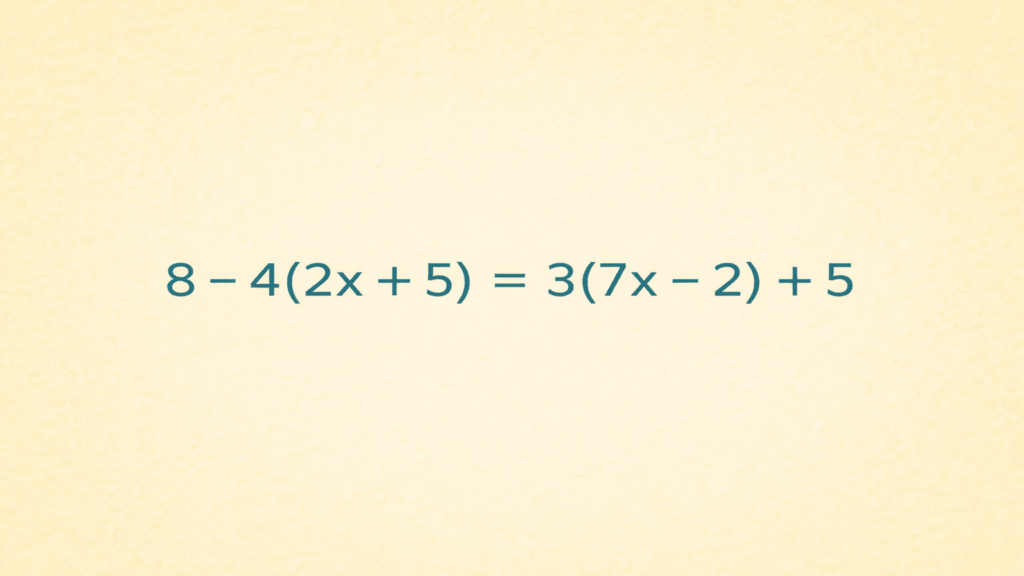
Two parentheses, negative numbers and variables on both sides of the equation. This equation requires not only knowledge of the procedure, but more importantly, steady nerves and care at every step. It’s not easy – but it’s all the more satisfying when the result comes out right. Can you do it?
Put everything else aside for a moment and prepare your brain for some serious concentration. Maths has a reputation for being boring – but anyone who sees it that way probably hasn’t practised it for a long time. In fact, it’s one of the most effective ways to keep the mind sharp. Equations force you to think sequentially: each step depends on the previous one, and a single missed sign can turn the whole result upside down. Curiously, solving equations activates the same areas of the brain as playing chess or cracking codes – in other words, you’re having fun and training at the same time.
What’s in store for you today?
In the picture you see the equation: 8 – 4(2x + 5) = 3(7x – 2) + 5. On the left side, the negative bracket immediately checks whether you remember the rules for unfolding. On the right side, another parenthesis and the free terms, which you need to add carefully. The problem is simple: find the value of x. A seemingly routine job – but the result may surprise you.
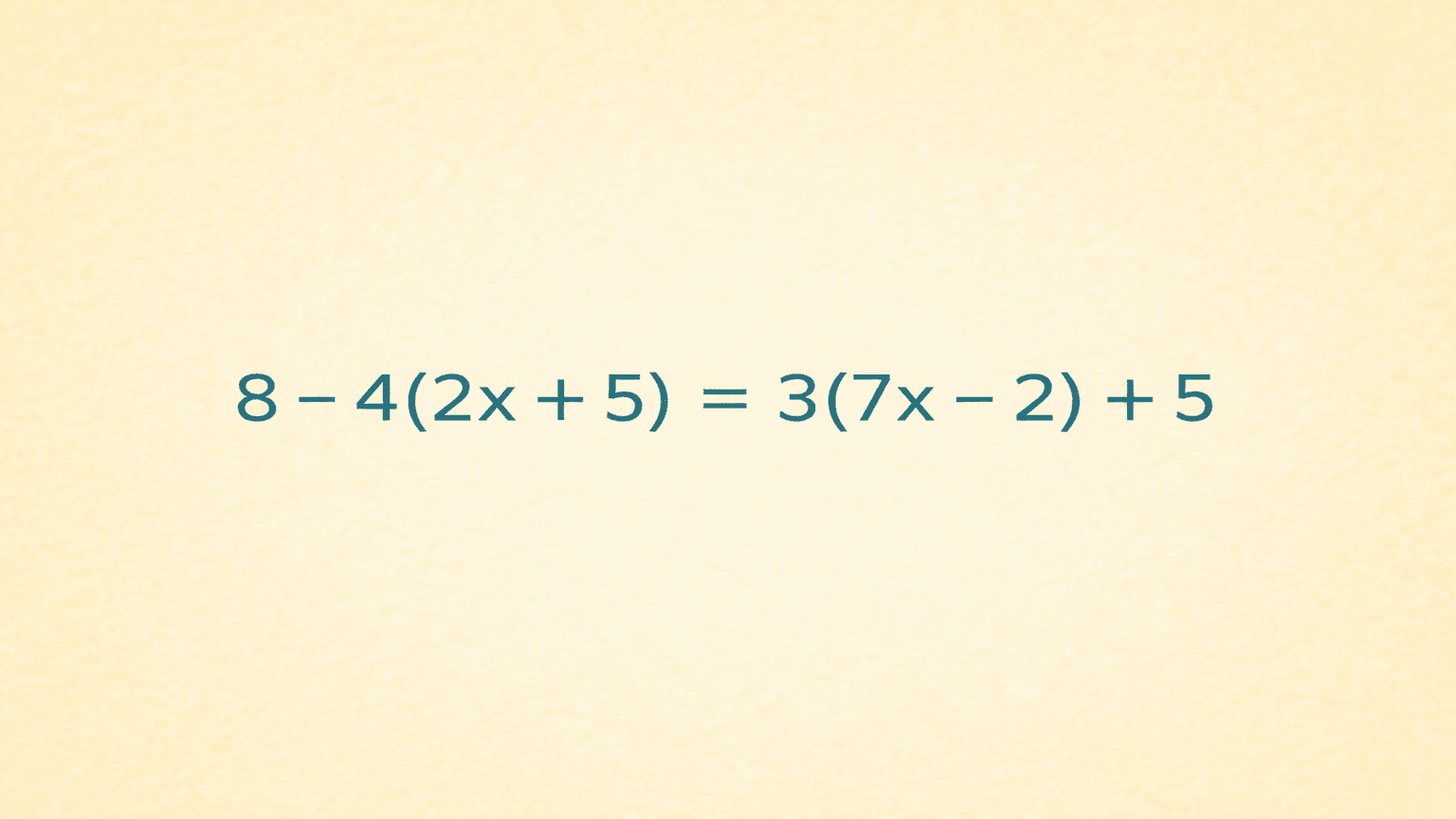 ━━ Calculate the example.
( Source: Shutterstock )
The correct solution
Did you arrive at the correct result or did this equation confuse you? Let’s break it down together.
The correct result is x = -11/29.
Expand the parentheses: 8 – 8x – 20 = 21x – 6 + 5. Simplify both sides: -12 – 8x = 21x – 1. Convert the variables to one side: -12 + 1 = 21x + 8x, so -11 = 29x. The result: x = -11/29. The negative fraction with the number 29 in the denominator will surprise most solvers – yet everything is absolutely correct, unless you have changed the signs when unrolling the parentheses.
Try sending this equation to a colleague or friend and see how long it takes them to solve it – and if they expect a negative fraction as a result at all. Regular practice with equations and similar math problems has been shown to improve concentration, strengthen working memory and train the ability to think systematically. If you enjoyed this challenge, there are many more equations, puzzles and IQ tests waiting for you on our website – come and find out where the limits of your abilities lie.


 Šárka Cvrkalová

 A. Urban

 L. Novak